Planning note · budget math
A T-Shirt Bar for Apartment Resident and Community Events
Resident events live or die on attendance. A shirt pressed on the spot is one of the few reliable reasons people come down.
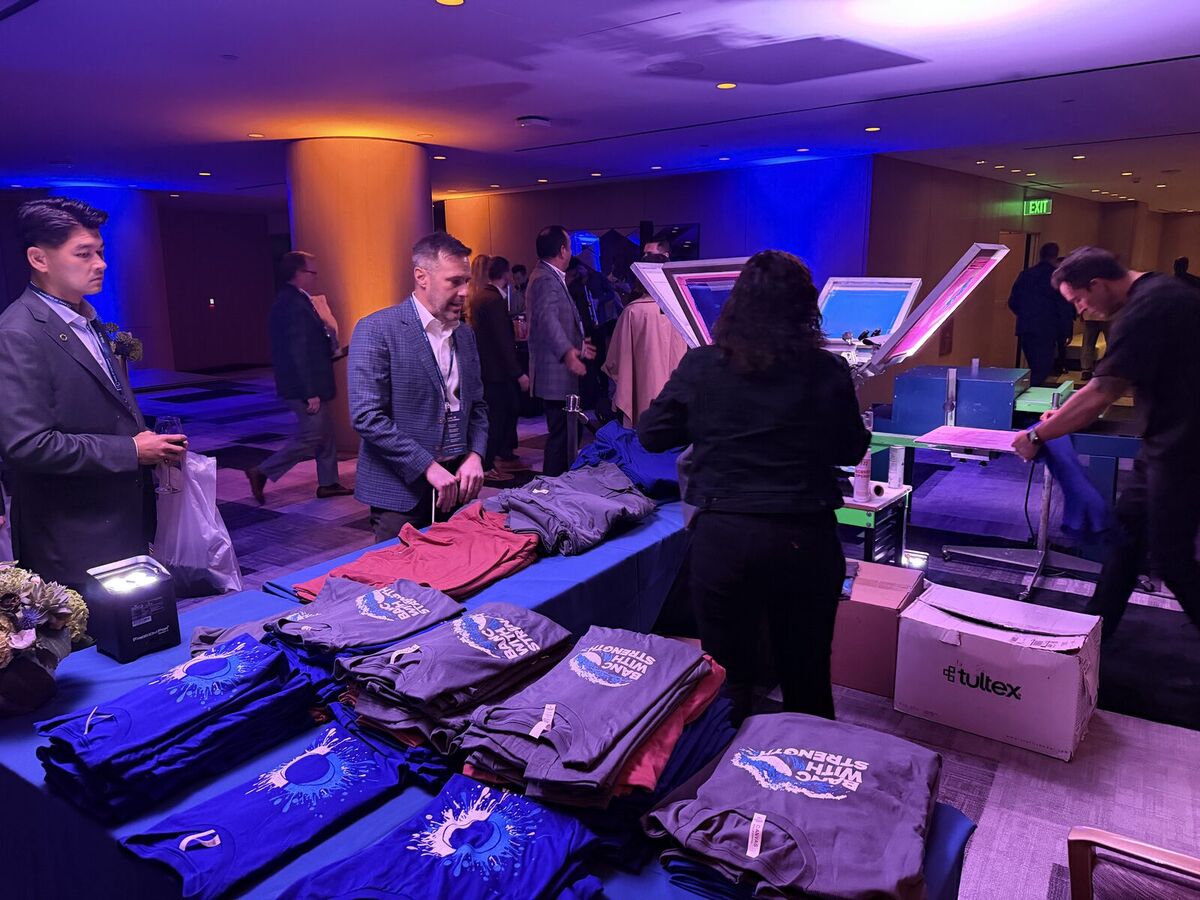
Every property manager has run the same experiment. You put out flyers, you order tacos, you block off the courtyard, and twenty-two people show up out of three hundred units. The food was fine. The problem was that nothing about it required anybody to leave their apartment.
A mobile t-shirt bar for apartment and community events solves a narrower problem than it looks like it does. It is not entertainment exactly — it is a reason. People come down because there is something to get, they stay because there is a line worth standing in, and they leave carrying a thing with the neighborhood’s name on it.
Why residents actually come down
Resident events compete with staying home, and staying home is very good. The winning formats all share one trait: a tangible, slightly scarce thing that only exists at the event. Food does not qualify, because residents can order food. A shirt printed with their building’s name and their choice of design does.
The secondary effect matters more to the leasing office. Residents who talk to their neighbors renew at better rates than residents who do not, and a queue is an unusually efficient way to make strangers talk. Ten minutes waiting for a press is ten minutes of conversation with the person in 4B.
If you are running this during renewal season, put the station near the leasing office and staff it with someone who can answer questions. That is the version property owners are happiest to fund.
Count units, not optimism
Ordering blanks for a resident event is different from ordering for a corporate one, because your attendance is genuinely uncertain and your size curve is genuinely wide.
Work from RSVPs where you have them, add roughly twenty percent for walk-ups, and land around 1.05 to 1.15 pieces per expected guest. Then split the curve. A downtown studio building skews adult small through large. A garden-style community with families needs youth sizes, and if you skip them you will spend the evening telling seven-year-olds no. Two hundred adult shirts and sixty youth shirts is a far more useful order than two hundred and sixty adult shirts.
Leftovers are not waste in this setting, which is a real advantage. Blanks that do not get printed go back to the leasing office for move-in gifts, tour giveaways, or the next event.
Nobody wants your leasing logo
The single most common mistake is putting the property management company’s corporate mark on the chest. Residents will take that shirt and never wear it.
What people actually wear is identity, not branding. The neighborhood name. The street. The building’s unofficial nickname. The dog park. A number that means something to people who live there and nothing to anyone else. Four to six options is the right menu size — enough that choosing feels like a choice, few enough that the line keeps moving. We wrote up how to build that menu in more detail.
One addition that works well in multifamily: let people add a small personalization — a unit number, a pet’s name, a move-in year. It costs almost nothing in press time and it changes the shirt from swag into something specific to them.
Clubhouses, pool decks, and COIs
Properties have quirks that corporate venues do not, and all of them are solvable if you ask early.
- Power. Each heat press wants a dedicated 20-amp circuit. Clubhouse outlets are frequently on shared GFCI runs with the kitchenette, which trips under a press. Have maintenance identify a clean circuit before the day.
- Pool decks. Popular, and workable, but keep the press well back from splash range and out of direct afternoon sun. Wet concrete and a hot platen are a bad combination.
- Insurance. Most management companies require a certificate of insurance naming the owner and the manager as additional insureds, sometimes a week out. Send the exact wording when you book.
- Access. In mid-rise and high-rise properties, reserve the freight elevator and confirm the loading zone. A crew with four cases and no elevator hold is a crew standing in a lobby.
- Rain plan. A parking garage level or the clubhouse interior is a better fallback than cancelling. Decide which one at booking, not at 3pm.
Making the number work
Here is the honest part. A staffed local package starts around five thousand dollars, which is more than most single properties carry in a monthly resident-event line. That does not mean the answer is no; it means the answer is usually structured differently.
Three approaches that hold up. Combine properties: if a management company runs several communities in the same metro, a single crew can hit two or three of them in one day and split the cost, which is dramatically cheaper than three separate bookings. Tie it to renewal season, where the retention value is easy to argue to an owner. Or bring in a co-sponsor — the local gym, a preferred insurance agent, a moving company — who funds part of it for logo placement on the sleeve.
And if none of that works, run preprinted shirts this quarter. There is a real comparison of when live beats preprinted, and sometimes it does not. Booking generally wants four to eight weeks of lead time, with artwork locked around ten business days out; pricing has the rest.
Frequently asked questions
How many shirts should we order for a resident event?
Start from RSVPs rather than door count, then add a walk-up buffer of about 20 percent because neighbors bring neighbors. Across the whole guest list, roughly 1.05 to 1.15 pieces per expected person is the working ratio. For a family community, split that into adult and youth sizes rather than ordering one flat curve, or you will run out of medium by hour two.
Do you need a certificate of insurance for our property?
Yes, and we would rather send it early than sort it out at the gate. Most management companies want the property owner and the management entity named as additional insureds, and some require it a week or more before the event. Send us the exact wording your risk team uses when you book, and get freight elevator or dock reservations on the calendar at the same time.
Is a t-shirt bar overkill for a small property?
Sometimes, and we will say so. A staffed local package starts around five thousand dollars, which is hard to justify for a forty-unit building with a modest social budget. If that is your situation, either combine several properties into one route day, tie it to renewal season when the retention math is real, or run preprinted shirts instead and save the live station for a bigger moment.
Bring us the unit count
Tell us how many units, what the space looks like, and whether this is one property or a portfolio, and we will come back with a realistic plan and an order sheet. Call (562) 614-4800 or use the quote form to get on the calendar.