Planning note · budget math
T‑shirt bar vs. a box of pre-printed shirts: the honest math
We sell both, so we have no reason to spin this. Sometimes the box wins. Here is how to run the comparison for your event instead of taking either sales pitch at face value.
The naive comparison everyone starts with
Per-unit, a bulk pre-print order is cheaper than a staffed live station — no crew hours, no equipment on site. If the analysis stops at unit price, the box wins every time. The analysis should not stop there.
The waste line nobody budgets
Pre-printing means committing to a size curve and a single design months out. Industry reality: a meaningful slice of every bulk event order — commonly 20–30% — goes unclaimed, mis-sized, or straight to storage. Price the shirts people actually take home, not the shirts you ordered, and the gap narrows sharply. A 500-shirt order with 125 left in boxes is a 375-shirt order that paid for 500.
The value line nobody prices
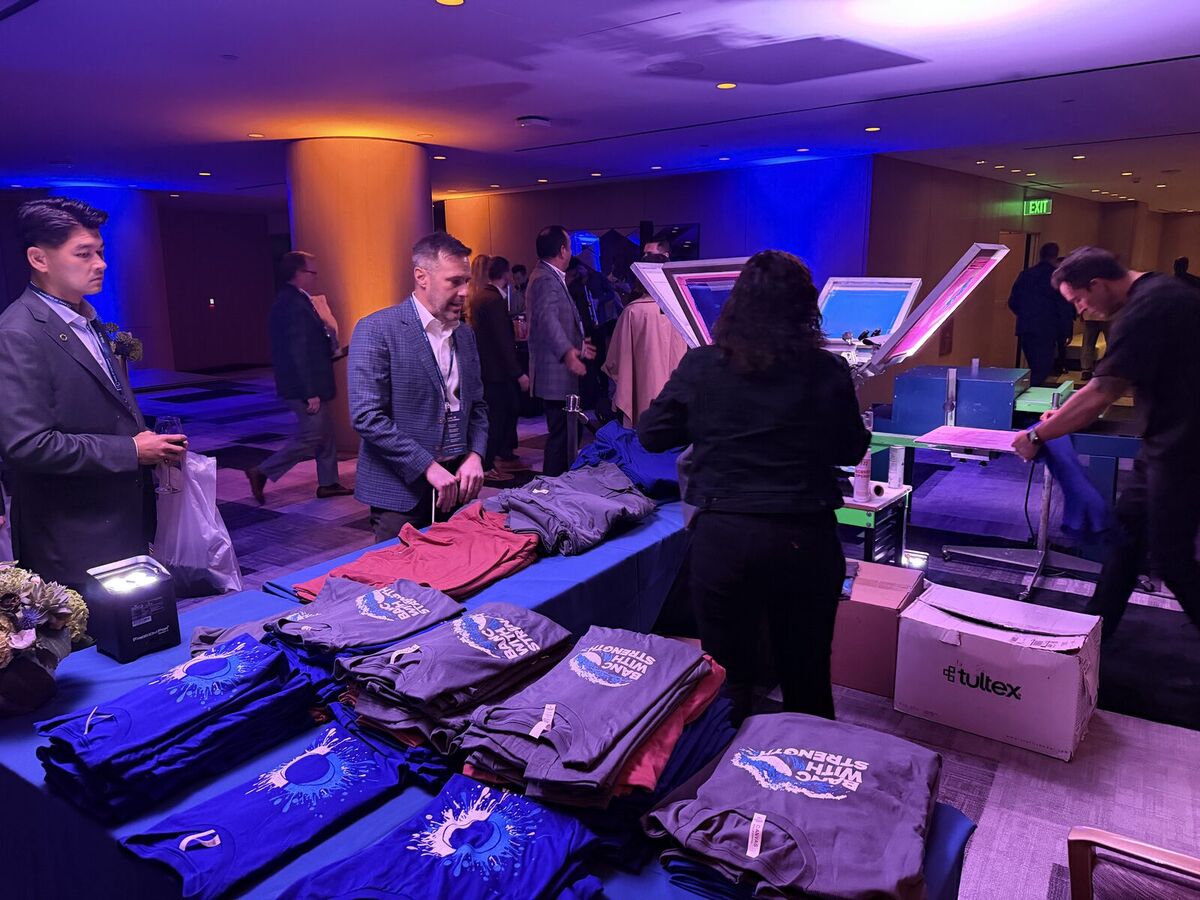
The bar is not just distribution; it is programming. It occupies guests, generates the most-photographed corner of the event, and produces shirts people chose — which changes whether the shirt gets worn again, and a worn shirt is the cheapest impression your brand will ever buy. If you would otherwise rent entertainment for that hour, some of the bar’s cost belongs in that budget column, not merch.
A 300-guest example, both columns filled in
Put real numbers on it. The box: 300 pre-printed tees at a decent blank-plus-print rate lands somewhere near $3,300 delivered, in one design, on a size curve someone guessed in March. Apply the typical 25% unclaimed rate and roughly $825 of that spend is now a closet problem — the effective cost per worn shirt just climbed by a third. The bar: a staffed station for the same crowd starts around $5,000 locally, presses only what guests actually claim, lets them pick from six designs in their own size, and doubles as the entertainment corner for the evening. The box is still cheaper on the invoice. The bar is usually cheaper per shirt that leaves on a human — and that is the only shirt doing your brand any work. Run your own version with the cost anchors before leadership picks a column.
The logistics column nobody fills in either
Pre-printed merch has a supply chain on both ends that never makes the comparison sheet. Upstream: production lead time measured in weeks, freight, and someone receiving eleven boxes at an office with nowhere to put them. Downstream: hauling the boxes to the venue, staffing a distribution table anyway, and then the awkward end-of-night question of what happens to the leftovers — storage, donation runs, or the dumpster nobody photographs. The bar’s logistics are one line: we show up two hours early with everything, and we leave with everything that didn’t press. For venues with tight docks or events run by small teams, that single line is sometimes the deciding argument before money even enters it — the footprint specs are the whole ask.
The split most events actually book
The comparison is framed as either/or; the mature answer is usually both, sized correctly. Uniform the fifty volunteers with pre-prints — identical, cheap, done. Point the bar at the three hundred guests, where choice and the pressing moment earn their cost. The ratio matters: events that flip it, pre-printing for guests and hand-pressing volunteer shirts, spend the premium exactly where nobody values it. If your headcount splits into “people who must match” and “people who should get to choose,” the budget has already sorted itself.
When the box honestly wins
- Uniforming: staff and volunteer shirts, identical by design
- Registration bags with guaranteed per-attendee counts
- Events with zero floor space or a no-vendor venue policy
- Budgets where per-unit price is the only metric leadership will read
Three questions that settle it in one meeting
If the debate is dragging, these three cut through. One: will anyone be sad if the shirt is identical for everyone? If no — box. Two: is there an hour of the event that needs something to do? If yes — that hour is the bar’s real job, and merch is the souvenir of it. Three: who owns the leftovers? If nobody volunteers to store, ship, or donate the surplus, you have just discovered the box’s hidden owner: you. Most planning meetings resolve on question three. Write the answers down, because the same debate returns every year with new stakeholders — and a one-paragraph memo from last time beats relitigating it from zero.
When the bar wins
Any event where the shirt is meant to be a moment: activations, welcome weeks, tours, openings, markets. Mixed events often split the difference — pre-print the volunteer uniforms, run the bar for guests. We will quote both sides of that split honestly; the cost page shows the bar’s anchors, and the quote form starts the real comparison for your date.